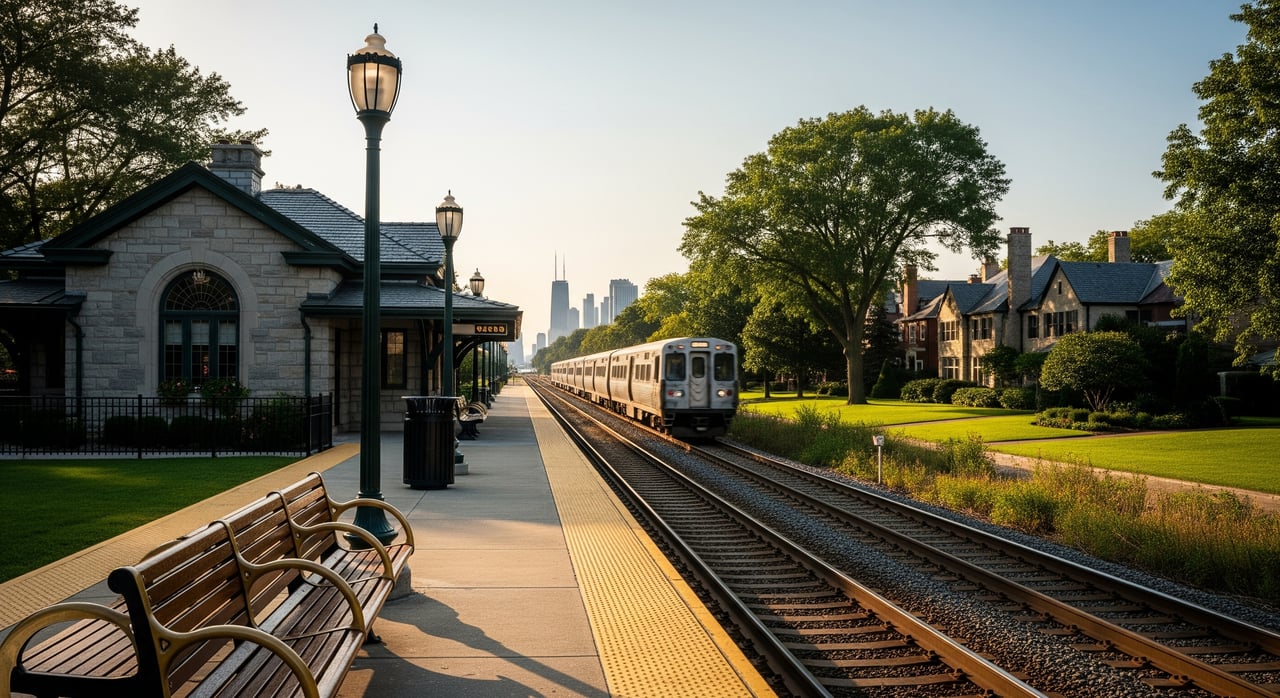
North Shore Metra Commute Guide from Winnetka
December 18, 2025
December 18, 2025
Does your day live or die by your train schedule? If you are weighing a move on the North Shore, your Metra line, station, and parking plan will shape your routine as much as your floor plan. You want a commute that is predictable, comfortable, and aligned with your lifestyle. In this guide, you will learn how the UP‑North and MD‑N lines work, what to expect from express vs. local service, and how station realities connect to home and neighborhood choices. Let’s dive in.
The Union Pacific North line runs along the Lake Michigan corridor that serves many North Shore communities. It focuses on commuter travel, so you see the most frequent trains during weekday morning and evening peaks. Off‑peak and weekends run fewer trips. If your station is part of a peak express pattern, you can save meaningful time each day.
The Milwaukee District North line serves parts of the North Shore and northwest suburbs on a different corridor. Several stations are near or in Glenview and Northbrook. Like UP‑North, it concentrates service in the peak direction during rush hours and scales back in the middle of the day and on weekends.
UP‑North trains typically arrive at Ogilvie Transportation Center on the west side of downtown. MD‑N trains arrive at Union Station, also on the west side. Know your terminal so you can plan your last‑mile connection, whether that is a short walk, CTA, a bus, or rideshare.
Express trains skip intermediate stops. If your station is on an express pattern during your commute window, your trip time drops and your cushion for delays improves. If your station is local‑only, your door‑to‑door time may run longer, which can affect your choice of neighborhood or whether you drive to a nearby express stop.
Peak periods offer the most options but can still face delays from rail traffic. Midday, late evening, and weekend service is less frequent. If your work is hybrid, you can often trade a longer ride on some days for more space or a quieter train.
Reverse‑direction trains exist but are limited compared with peak‑direction service. If you work unconventional hours, build in a plan B, such as driving, rideshare, or a bus connection when trains are sparse.
Some village centers sit right by the platform with coffee shops and services just steps away. These areas are ideal if you want a short walk and fewer daily parking costs. Other stations lean more auto‑oriented, with larger lots and easier drop‑off areas that favor households who drive to the train.
Homes within a 5 to 10 minute walk of popular stations often command a price premium. Neighborhoods served by express trains tend to see higher demand. If you prefer lower housing costs per square foot, consider a local‑only stop or a short drive to an express stop with dependable parking.
Shelters, seating, warming rooms, bike racks, real‑time boards, and ticket machines vary by station. If you need step‑free access, confirm ADA features such as ramps or elevators. Comfort adds up when you use the station twice a day, five days a week.
Most North Shore stations mix monthly permits with daily pay options. Permit areas can be reserved or permit‑only, while daily spaces are first‑come. Enforcement is common, so make sure you are parked in the correct zone.
Permit fees are set locally and vary by town. Monthly costs often fall in the broad range of tens to low hundreds of dollars, and some lots maintain waitlists. Many lots place limits on overnight stays and have seasonal rules, especially in winter.
If permits are tight or you prefer flexibility, consider:
Review weekday and weekend timetables for the UP‑North and MD‑N lines. Check real‑time train trackers and alerts on travel days to validate your preferred departure windows. Test your typical trip during house hunting to confirm timing and comfort.
Village centers near the tracks often offer easy walks to shops and the platform. This setup is attractive if you value a short walk and want to avoid daily parking. Expect stronger demand close to the station and along routes served by express trains during peak hours.
Several stations along the MD‑N corridor are near or in these communities. Many provide larger parking areas and convenient drop‑off zones that work well if you plan to drive to the train. If you prefer more space at home or want a lower price per square foot, this approach can keep your commute workable.
Areas with mixed walkability, parking choices, and varied amenities can give you more options. You can balance a short walk with daily parking as a fallback. If you are testing a new schedule, this flexibility reduces risk as you settle into a routine.
The right Metra plan can save you time every week and reduce stress on busy days. Aligning your line, station, and parking strategy with your lifestyle is just as important as the bedroom count. If you want a home search that connects commute realities with neighborhood fit, reach out to a local expert who does this every day. For tailored guidance across Winnetka and the North Shore, connect with Kim Kelley Residential. Get your instant home valuation or ask for a curated list of homes within your ideal commute window.